
Studio Who logo
  • Home
  • About Us
  • Services
    • Brand Strategy Canberra
    • Website Design Canberra
    • Content Marketing Canberra
  • Portfolio
  • Blog
  • Contact
Start a conversation
logotype
  • Home
  • About Us
  • Services
    • Brand Strategy Canberra
    • Website Design Canberra
    • Content Marketing Canberra
  • Portfolio
  • Blog
  • Contact
Start a conversation
  • Home
  • About Us
  • Services
    • Brand Strategy Canberra
    • Website Design Canberra
    • Content Marketing Canberra
  • Portfolio
  • Blog
  • Contact
Studio Who
HomeStudio WhoPage 3

Category: Studio Who

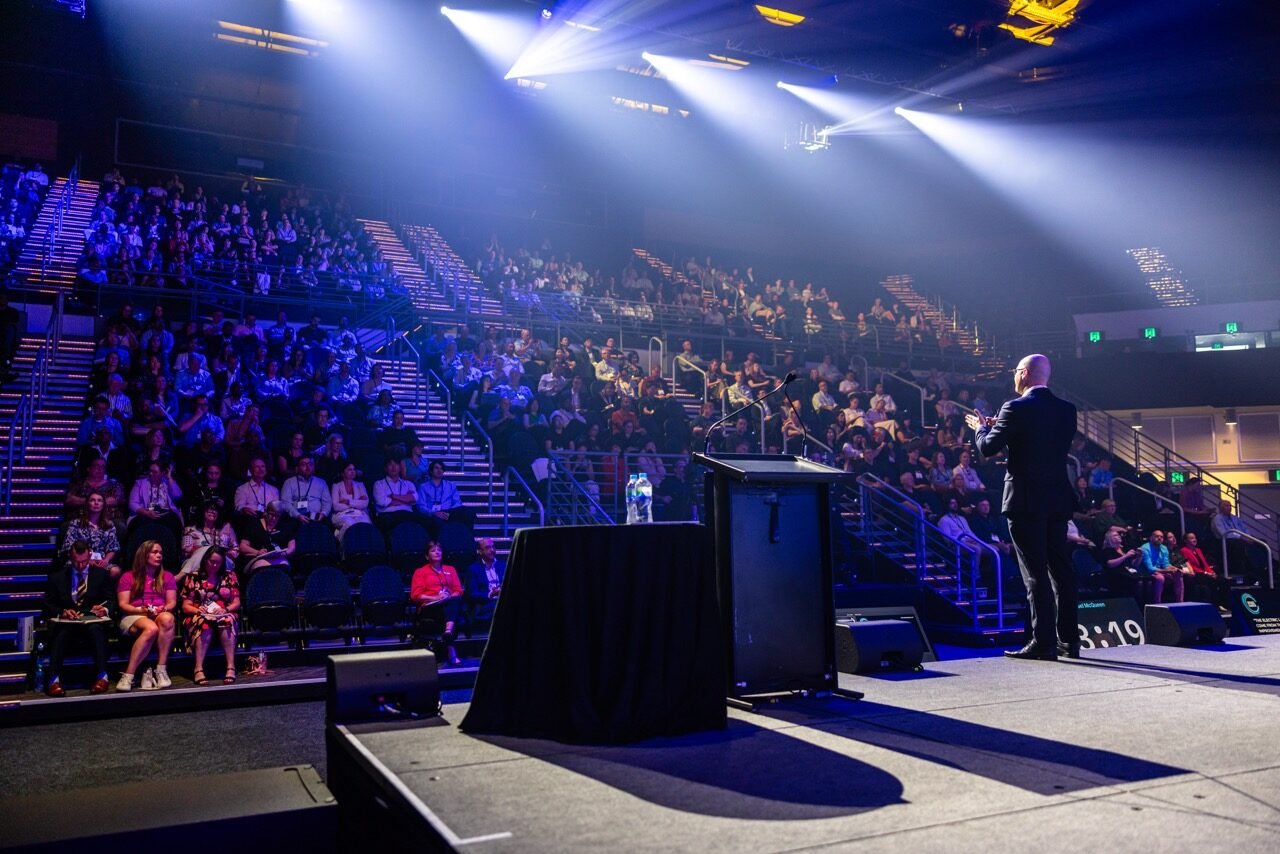
CPA Congress 2025 arena
Studio Who
5 April 2026By Studio Who Team

Content for Events: How to Make Your Event Memorable (and Shareable)

Your Event Deserves More Than a Few Phone Photos

You spent months planning the venue, the speakers, the catering, the run sheet. The day itself was a blur of handshakes, keynotes, and standing ovations. And then it’s over.

A week later, someone asks for a recap. All you have is a handful of phone snaps from the registration desk and a blurry shot of someone mid-sentence on stage.

Sound familiar?

Events are one of the highest-value marketing opportunities a business or organisation can invest in. But without proper event content coverage, most of that value walks out the door when the last guest leaves.

Why Event Content Matters More Than You Think

A well-run event does three things at once: it builds relationships, positions your brand, and creates trust. The problem is, all of that happens live and in the moment. Unless you capture it properly, you have nothing to show for it afterwards.

Good event content lets you:

  • Extend the life of your event from a single day into weeks or months of marketing material
  • Show sponsors and stakeholders real proof of impact, not just attendance numbers
  • Attract future attendees by giving them a feel for what they missed
  • Reinforce your brand positioning by showing the calibre of people and conversations you bring together

When we covered the CPA Congress 2024 at the National Convention Centre in Canberra, the team captured everything from keynote presentations to candid networking moments across a two-day program with over 1,000 attendees. That content didn’t just live on as a memory. It became a highlight reel played at the business lunch the next day, a library of images for future promotion, and proof of the event’s scale and professionalism.

That’s the difference between documenting an event and actually using it.

What “Good Event Coverage” Actually Looks Like

It’s not just about having a camera operator in the room. Proper event coverage starts well before the day itself and carries through into how the content gets used afterwards.

Here’s what we typically think about:

Before the Event

  • What are the key moments you need captured? Keynotes, panel discussions, sponsor activations, networking?
  • Who are the important people to feature? Speakers, organisers, VIP guests?
  • What will the content be used for? Social media, internal comms, stakeholder reports, future event promotion?
  • What’s the turnaround time? Do you need same-day edits, or is a week fine?

Getting clear on these questions early means the crew arrives with a plan, not just a camera.

On the Day

The best event content comes from a team that can be everywhere without getting in the way. That means multiple camera operators, dedicated audio setups for interviews, and a photographer working independently of the video crew.

For the IBM x AIIA International Women’s Day luncheon, we ran a two-camera setup with multiple audio sources to cover both the panel discussion and candid moments throughout the room. Interviews with key guests were conducted after the main program, giving us personal soundbites that elevated the final edits without disrupting the event itself.

For something like the Akolade 9th Australian Data Summit, the challenge was different. Multiple sessions running across different rooms over two days meant we needed a detailed shoot plan just to make sure nothing fell through the cracks. The result was over 150 edited photos, a highlight video, and a full archive of raw footage the client could draw on for years.

After the Event

This is where most organisations drop the ball. You have all this great footage and photography, but it sits in a Google Drive folder and never gets touched.

The smartest event organisers plan their post-event content strategy before the event even happens. They know they want:

  • A 60 to 90 second recap video for social media
  • A shorter cutdown (15 to 30 seconds) optimised for Instagram or LinkedIn
  • A curated set of photos for their website and annual report
  • Interview clips they can repurpose into standalone content pieces
  • Raw footage for internal presentations or future event pitches

When we worked with the Foundation for Young Australians on their Make It 16 campaign at Parliament House, we delivered raw interview cuts within 24 hours so they could maintain campaign momentum. The full recap video followed shortly after, and the image suite gave them months of content for press, social media, and school engagement programs.

That’s not just event coverage. That’s a content strategy wrapped around a single day.

Making Your Event Shareable

Here’s the thing about events: the people who attend them are already your best advocates. They were there. They felt the energy. They met the speakers. Give them something worth sharing and they will.

A few practical tips:

Capture the atmosphere, not just the agenda. The moments between sessions often tell a better story than the keynote itself. Candid networking shots, laughing faces, people leaning in during a panel. That’s the stuff that makes someone say “I wish I was there.”

Think vertical, not just widescreen. Most event content gets shared on phones. If you’re only shooting in landscape, you’re missing the format that gets the most engagement on LinkedIn, Instagram, and TikTok.

Turn attendees into content. Short interviews, testimonial grabs, even a quick “what was your highlight?” clip at the end of the day. These are gold for social proof and they make attendees feel valued.

Brand it properly. Clean lower-thirds, your logo in the right places, consistent colour grading. It sounds obvious, but polished event content signals that your organisation takes itself seriously.

It Doesn’t Have to Be Complicated

You don’t need a Hollywood production crew to get great event content. What you do need is a team that understands what you’re trying to achieve, shows up prepared, and delivers content that actually gets used.

Whether it’s a 50-person industry breakfast or a national congress with a thousand attendees, the approach is the same: plan the content before the event, capture it professionally on the day, and make sure it works hard for you afterwards.

If you’re running an event in Canberra or anywhere in Australia and want content that does more than just sit in a folder, get in touch. We’ll help you turn one day into months of marketing material.

Book a discovery call and let’s talk about what your next event could look like on screen.
Read More
A7402630 Large
Studio Who
3 April 2026By Studio Who Team

What Is Included in Studio Who Construction Content Packages

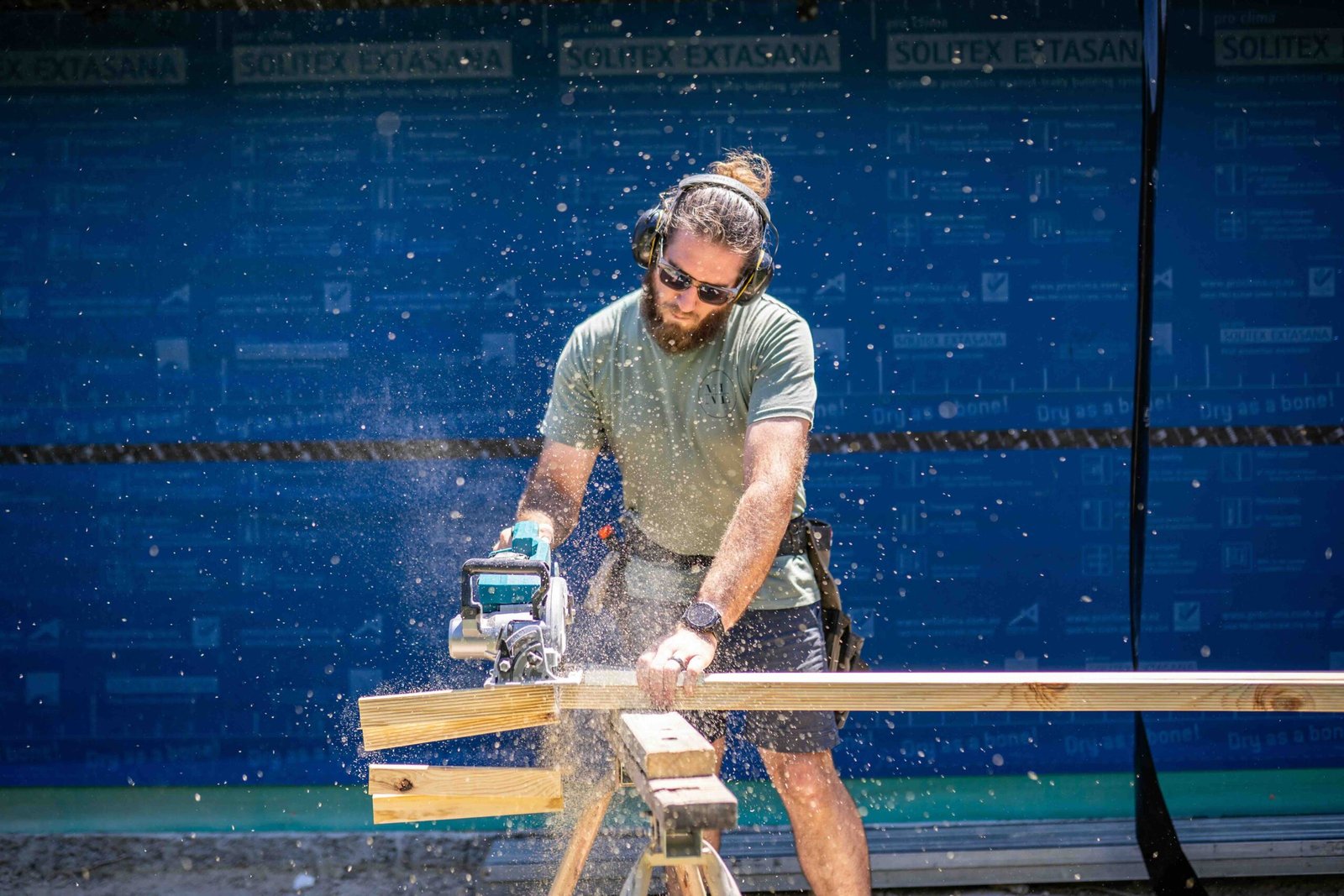
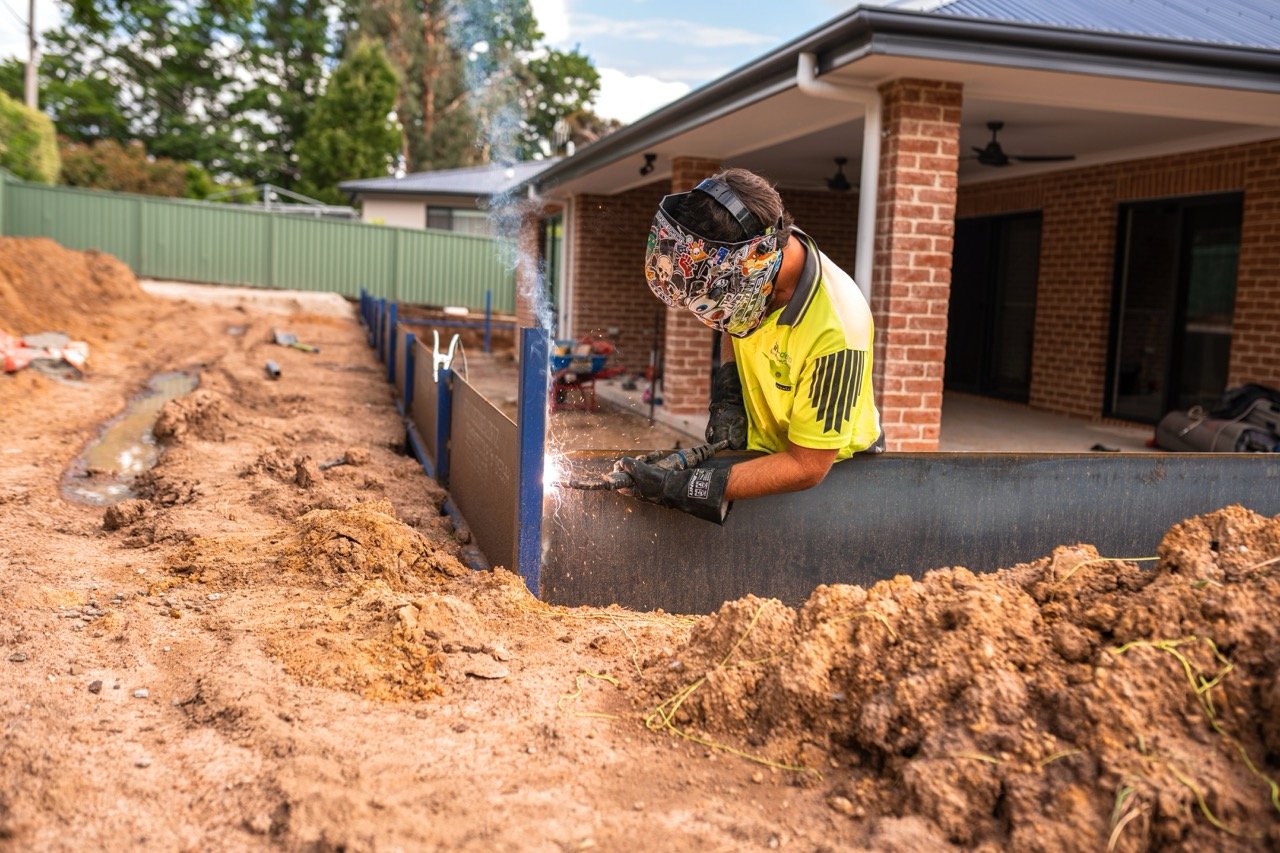
In Canberra, reputation is everything. The quality of the work you deliver on site should be matched by the quality of the content representing your business everywhere else. For builders and tradies across the ACT, that gap between the standard of the work and the standard of the marketing is often significant, and it costs jobs.

We have put together a set of content packages designed specifically for Canberra builders, tradies, and construction companies. Each one is built around a specific need, whether that is a one-off project showcase, a full build documentation, or ongoing social media presence. Clear deliverables, clear pricing, no surprises.

Pricing below is current as of 2026 and is subject to change. We will always confirm current pricing before any booking is confirmed.

Real project showcase

In-Depth Landscaping Construction — Fossey Street, Holder

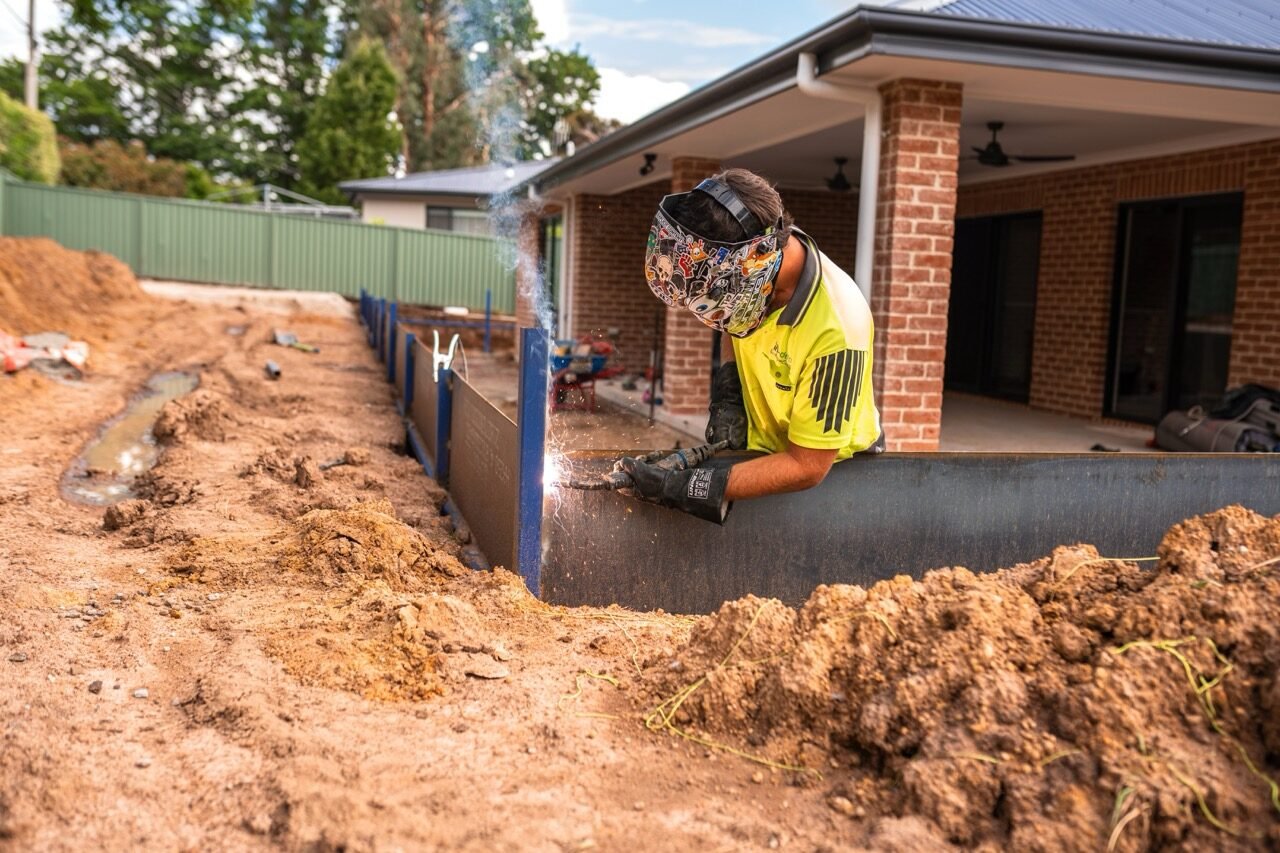
A full build narrative produced across four filming sessions — from design office and client consultation through to construction commencement, mid-project progress, and completed installation. Drone coverage, on-site b-roll, and craftsmanship close-ups capture the team’s precision from start to finish.

Why Canberra tradies invest in professional content

Canberra is a small city with a tight professional network. When you do good work, people hear about it. When your online presence does not reflect the quality of that work, you are leaving something on the table.

Strong visual content does several things at once for a construction business. It gives prospective clients a clear picture of your workmanship before they pick up the phone. It strengthens ACT Government and commercial tender submissions, where professional capability statements and project documentation can make the difference between winning and missing out. It builds the kind of consistent online presence that keeps your business top of mind in the months between referrals.

Every asset in these packages is designed for real-world use: websites, social media, Google Business, tender packs, and long-term marketing. Nothing that sits on a hard drive.

Aerial drone view of Canberra construction site

Package 1: The Signature Showcase

A cinematic hero piece that proves your team builds excellence, not just claims it.

Best for builders and tradies wanting a polished one-off project showcase that elevates their brand across socials, websites, and tender submissions.

What’s included:

  • 1 to 2 minute cinematic project film
  • Optional builder intro (short, authentic message to camera)
  • 15 to 30 premium stills
  • Drone coverage
  • On-site b-roll

Investment: $1,650 inc GST

A clean, modern showcase that instantly strengthens your credibility and reflects the professionalism of your work. Ideal for winning jobs across Canberra’s growing suburbs including Belconnen, Gungahlin, Molonglo, Woden, Tuggeranong, and the Whitlam precinct.

Package 2: The Build Journey Package (Pre + Post)

Show the transformation, the craftsmanship, and the pride that sets your team apart.

Best for builders wanting to demonstrate their process and final result. Works well for renovations, new builds, extensions, landscaping projects, and commercial fit-outs.

What’s included:

  • Pre-construction photo set
  • Final cinematic showcase video
  • Completed project stills
  • Drone before and after coverage
  • Walk-through footage

Investment: $2,900 inc GST

Canberra clients hire based on trust. This package gives them a clear look at how you work, from preparation to completion, proving your consistency, attention to detail, and reliability in a way that words alone never could.

On-site construction photography Canberra

Package 3: The Full Construction Narrative (Pre + Mid + Post)

A complete documentary-style record of your build from start to finish.

Best for builders looking to grow their brand, secure larger projects, or strengthen ACT Government and commercial tender submissions with thorough project documentation.

What’s included:

  • Pre, mid, and post-construction photo sets
  • Progress clips for ongoing social content
  • Final hero film
  • Craftsmanship and process vignettes
  • Drone coverage at each stage
  • Supervisor or project manager interview
  • Branding assets suitable for capability statements and proposals

Investment: $4,550 inc GST

This package creates a powerful visual record of your project, showcasing your systems, workmanship, team culture, and quality from foundation to finish. The kind of content that wins tenders and builds lasting reputation.

Package 4: Social Media Management

Consistency, credibility, and community, done for you.

In Canberra’s tight-knit market, the builders and tradies who show up consistently online win more work. This package ensures your business stays active, sharp, and front of mind, especially when combined with your project content packages.

Minimum term: 3 months
Investment: $750 + GST per month ($2,250 over 3 months)

What’s included:

  • 3 professionally designed posts per week (mix of progress clips, completed project highlights, team moments, and capability content)
  • Caption writing tailored to the Canberra market, confident and industry-relevant
  • Hashtag strategy based on ACT regions and trades
  • Scheduling and publication on your chosen platforms
  • Content repurposing from your existing video and photo packages
  • Monthly insights summary covering engagement, reach, post performance, and recommendations

Your content does not sit on a hard drive. It works for you. You show up every week without having to think about it, and the consistency builds the kind of reputation that generates referrals year-round.

This package works especially well alongside the project packages above. The project shoots give you the raw material. The social management ensures it reaches your audience consistently over time.

A note on pricing and travel

All pricing listed above is current as of 2026 and is subject to change. We will always confirm current investment levels before any work is booked or invoiced. A 50% deposit is required to secure your booking, with production scheduled around your project timeline.

Package pricing includes travel to work sites within 25km of Canberra CBD (postcode 2600). We do work with businesses outside of Canberra – if your sites are beyond that radius, additional travel fees apply depending on the distance. Get in touch and we’ll work out what makes sense for your situation.

Who these packages are for

These packages are built for Canberra-based construction businesses at any stage of growth. Whether you are a sole tradie who wants a single strong showcase to anchor your website and Google Business profile, or a growing construction firm looking to build a full content library for tender submissions and ongoing marketing, there is a package that fits where you are.

The businesses we work with in the construction sector share one thing in common: they do excellent work, and they want the content representing them to reflect that. If that sounds like you, we would be glad to talk through which package suits your next project.

For more on how content works for property and construction businesses, see our piece on content for property and construction.

Get in touch with the Studio Who team at studiowho.com.au/contact or call (02) 6103 0948.

Read More
Studio Who design work
Studio Who
27 March 2026By Studio Who Team

Why Good Branding Is More Than Just Looking Professional

A lot of businesses think branding starts and ends with a logo. Get the mark right, pick some colours, choose a font, and you are done. Move on to the next thing.

That is not branding. That is visual identity. It is a part of branding, and it matters, but it is not the whole picture. Confusing the two leads businesses to invest in the visible surface of their brand while neglecting the parts that actually drive decisions.

Good branding is the system underneath the visuals. It is the reason a business feels trustworthy before you have ever spoken to anyone there. It is what makes one accountant feel different from the next one on the list, even when their services are essentially the same. It is why some businesses attract exactly the right clients without having to explain themselves at length, and why others spend years chasing work that never quite fits.

What branding actually is

Branding is the set of signals, consistent and accumulated over time, that tells people who you are and what to expect from you.

Those signals include the visual identity: the logo, the colours, the typography, the way things look. But they also include the way you write, the way you speak to clients, the experience of working with you, the quality of the content you produce, the tone of your emails, the look of your physical space if you have one. Every touchpoint either reinforces or contradicts the impression you are trying to create.

This is why businesses that invest only in their logo and then neglect everything else often end up with a brand that looks polished on the surface and inconsistent underneath. A beautifully designed website with phone-quality photography sends a mixed message. A sophisticated visual identity paired with informal, error-prone copy sends a mixed message. Consistency across all of those signals is what makes a brand feel credible rather than just professional-looking.

Branding is a trust mechanism

The most useful way to think about branding is as a trust mechanism. Before a prospective client calls you, meets you, or decides to buy from you, they are forming an impression based on what they can see. Your website. Your social presence. Any content you have produced. Referrals they have heard. The overall picture they are assembling from those sources tells them whether to trust you enough to take the next step.

Strong branding makes that impression positive and coherent. Weak branding leaves it to chance.

In industries where trust is the primary currency, the quality of your branding does a significant amount of commercial work before any conversation takes place. A professional services firm, a healthcare provider, a financial adviser, an architect: all of them are asking prospective clients to trust them with important things. Content that communicates credibility, warmth, and competence before the first meeting is not a nice-to-have. It is doing real commercial work every day.

The difference between looking professional and being understood

There is a meaningful difference between looking professional and being understood.

Looking professional means your materials are clean and consistent. The logo is not pixelated. The website is not broken. The photography is not blurry. These things matter, and their absence sends a negative signal, but their presence alone does not make a brand effective.

Being understood means that when someone encounters your business for the first time, they get it. They understand what you do, who you do it for, and why you are the right choice for them. That clarity is what drives enquiries, reduces the time spent on mismatched conversations, and makes marketing more efficient.

A lot of Canberra businesses look professional but are not clearly understood. They have a well-designed website that says something generic about quality and service. They have a polished logo that could belong to any business in their category. They look fine, but they do not communicate anything that differentiates them from the next option on the list.

The businesses in Canberra that are growing consistently tend to be the ones that have figured out what makes them different and have found ways to communicate it clearly and repeatedly across everything they produce. That is a brand strategy problem, not a visual design problem.

Branding is built through repetition

One reason branding takes time to work is that it operates through repetition. A single good piece of content does not build a brand. A single good photoshoot does not build a brand. What builds a brand is the accumulation of consistent signals over time, each one reinforcing the same impression.

This is why brands feel established. You encounter a business enough times, in enough contexts, and your impression of them solidifies. You know what they stand for. You know what to expect. That familiarity is a form of trust, and it is built through consistency over time, not through a single campaign or a rebrand.

For small and medium-sized businesses, this has a practical implication: the work of branding is never really finished. It is an ongoing commitment to showing up consistently, across all channels and touchpoints, in a way that reinforces the same impression. That requires discipline, and it requires having enough clarity about your positioning that you can apply it consistently without having to rethink it each time.

What content has to do with all of this

Content is one of the most powerful tools a brand has, because it does multiple jobs simultaneously. It communicates what you know. It demonstrates how you think. It shows what kind of business you are before any sales conversation takes place. And it does all of that at scale, reaching people who have never met you and may never meet you in person before deciding whether to get in touch.

For a Canberra business competing in a market where reputation and referral still matter enormously, content is how you extend your reach beyond the people who already know you. It is how you become findable, credible, and trusted by people who are looking for what you offer but do not yet know your name.

The relationship between branding and content is tight. A clear brand strategy makes content easier to produce, because you know what you are trying to communicate and who you are communicating it to. Good content, produced consistently and in a way that reflects your positioning, reinforces the brand at every touchpoint. The two strengthen each other when they are aligned.

We have written more about how this plays out for specific industries in our content for professional services piece and across the broader Studio Who Insights blog.

Where to start if your branding is not working

If your current branding is not generating the enquiries or the clients you want, the problem is usually one of three things.

The first is clarity. You have not clearly defined what makes you different from your competitors, and that lack of definition shows up as generic positioning that nobody finds compelling.

The second is consistency. You have a visual identity and some sense of your positioning, but it is not applied consistently across your materials, your content, and your client experience.

The third is visibility. Your brand is clear and consistent, but not enough of the right people are encountering it often enough to build the familiarity and trust that drives enquiries.

Each of those problems has a different solution, but they all start with the same place: getting clear on what your brand is actually supposed to communicate, and to whom. That is the work of brand strategy, and it is the foundation everything else is built on.

If you are building your brand strategy from scratch or working out how to strengthen an existing one, our guide to building a brand strategy for a Canberra small business is a useful starting point.

Branding is what makes everything else work better

The businesses that invest in getting their branding right, not just the visual layer but the strategy underneath it, tend to find that everything else gets easier. Marketing becomes more efficient because the message is clearer. Sales conversations are shorter because the right people are already pre-sold on the fit. Content is easier to produce because the positioning is clear. Referrals are more specific because people understand exactly what kind of work you do and who you do it for.

That is the compounding value of good branding. It is not an expense. It is the foundation that makes every other commercial investment more effective.

If you are working on your brand or wondering why your current one is not doing the work you need it to do, we would be glad to talk. Get in touch with the Studio Who team at studiowho.com.au.

Read More
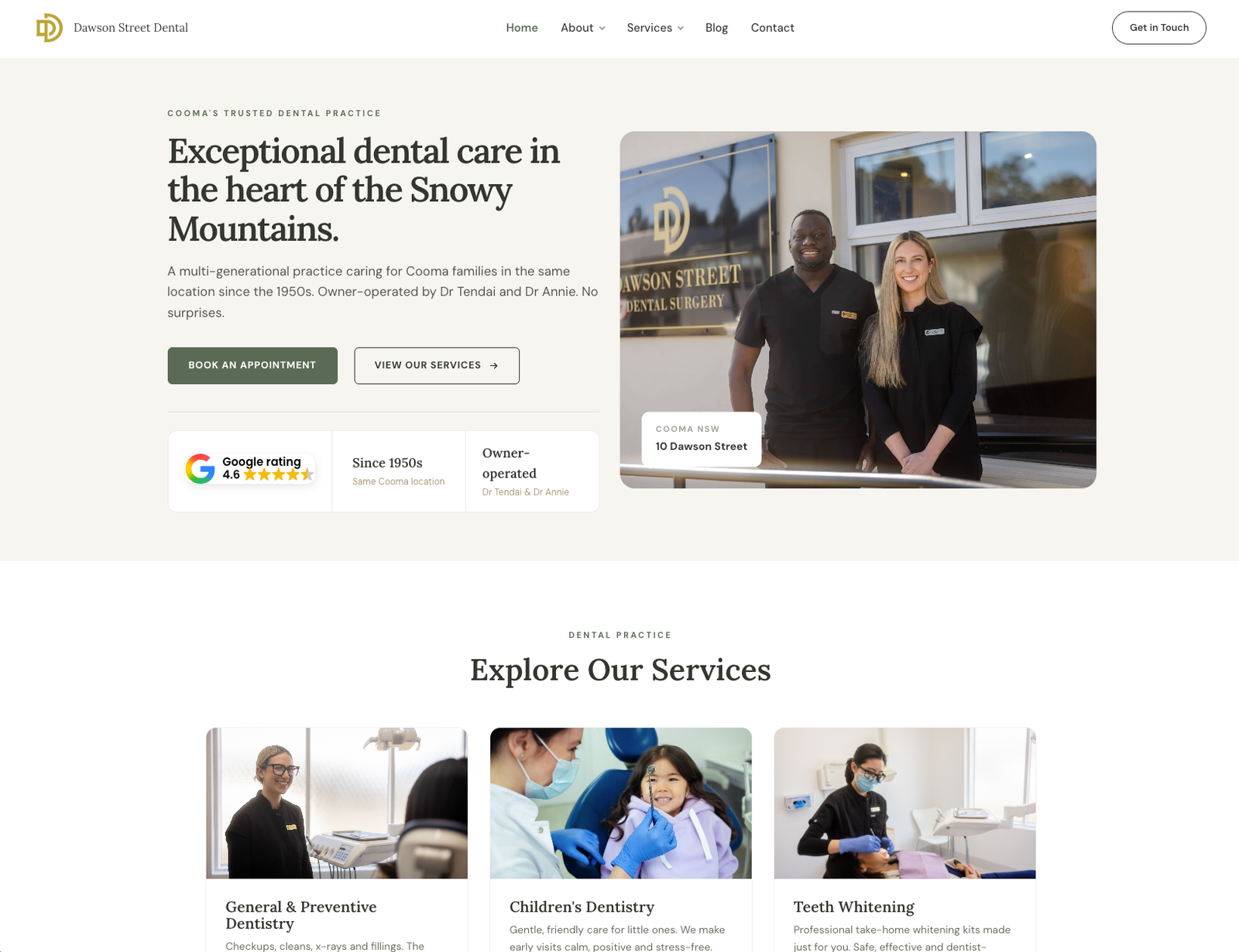
Dawson Street Dental website by Studio Who
Studio Who
27 March 2026By Studio Who Team

Website Design for Small Business: What to Expect and What to Budget

Getting a website built for your small business should be straightforward. In practice, it often isn’t. Timelines blow out, costs come as a surprise, and the end result doesn’t quite match what you had in your head.

This guide is for Canberra small business owners who want an honest picture of what the website design process actually looks like, how much it costs, and what to watch out for along the way.

What Kind of Website Do You Actually Need?

Before you talk to anyone about design, it helps to get clear on what you’re trying to achieve. A website that generates leads works differently to a website that sells products, which works differently to a website that builds credibility for a service-based business.

For most Canberra small businesses, the goal is one or more of the following:

  • Get found on Google when locals search for what you offer
  • Convert visitors into enquiries or bookings
  • Build trust with potential clients before they reach out
  • Replace a site that looks outdated or doesn’t work on mobile

Knowing your goal shapes everything from the structure to the content to the platform choice. A simple five-page brochure site has very different requirements to an e-commerce store or a booking system.

The Website Design Process: What to Expect

Every studio does things slightly differently, but most website projects follow a similar path.

1. Discovery

A good designer or studio will want to understand your business before they start. This usually involves a conversation about your goals, your audience, your competitors, and what you like and don’t like about your current site (if you have one).

If you’ve done any work on your brand strategy, this is the time to share it. It gives the designer a much stronger foundation to work from.

2. Sitemap and structure

Before any design happens, you should agree on the structure of the site. How many pages? What sections does each page need? How does a user move from the homepage to an enquiry form?

This sounds simple but it’s where a lot of projects go off track. Changing the structure mid-build costs time and money.

3. Design

Most designers will present visual concepts for the homepage first, then move through the other pages once the direction is approved. You’ll typically get one to three rounds of revisions depending on what was agreed upfront.

Be specific with your feedback. “I don’t like it” is hard to work with. “The colours feel too corporate and I’d like more white space” gives the designer something to act on.

4. Development

Once the designs are approved, the site gets built. This is where it becomes a functioning website rather than a static image. It should be tested across different devices and browsers before it goes live.

5. Content

This is the part most clients underestimate. The design can be perfect but if the words aren’t ready, the project stalls. Have your copy, images, and any other content ready before development starts. Your designer will thank you for it.

6. Launch and handover

Once everything is approved and tested, the site goes live. A good studio will walk you through how to make basic updates yourself, and should provide some form of support for the first few weeks after launch.

How Much Does a Website Cost in Canberra?

This is the question everyone wants answered. The honest answer is: it depends. But here are some realistic ranges for small business websites in Australia.

DIY website builders (Squarespace, Wix, Shopify)

Cost: $200 to $600 per year in platform fees, plus your time.

Good for very early-stage businesses or sole traders who need something simple and are comfortable building it themselves. The results can look polished but are harder to customise and can have SEO limitations.

Freelance designer or developer

Cost: $2,000 to $8,000 for a standard small business site.

The range is wide because experience and quality vary significantly. A junior freelancer might charge $2,000 for a template-based site. An experienced freelancer doing custom work might charge $6,000 to $8,000.

Small design studio

Cost: $6,000 to $20,000+

A studio brings a team approach, which usually means better coordination between strategy, design, and development. For a five-page to ten-page site with custom design, $8,000 to $15,000 is a reasonable expectation from a quality studio in Canberra.

What affects the price?

  • Number of pages and complexity of the structure
  • Whether copy and photography are included
  • Custom functionality (booking systems, e-commerce, integrations)
  • Whether brand strategy and design are done at the same time
  • Ongoing support and maintenance

What You Should Watch Out For

Cheap quotes that leave out the essentials

A $1,500 website quote sounds great until you realise it doesn’t include copywriting, stock images, SEO setup, or mobile optimisation. Always ask what’s included and what’s not.

No discovery process

If a designer jumps straight to showing you templates without asking about your business goals, that’s a sign the result will be generic. Good website design starts with strategy, not visuals.

Unclear revision rounds

Scope creep is one of the biggest causes of budget blowouts. Make sure your agreement specifies how many rounds of revisions are included and what happens if you need more.

Owning your own website

Make sure you own the domain, the hosting account, and the website files. Some designers retain control of these as a way to lock you in. You should always be able to walk away with your site intact.

What Makes a Good Small Business Website?

Beyond looking good, a website that works for your business needs to:

  • Load quickly on mobile (more than half of web traffic is on phones)
  • Be easy to navigate with a clear path to enquiry or purchase
  • Communicate what you do and who you do it for within the first few seconds
  • Be built with SEO in mind from the start
  • Reflect your brand, not just a generic template

The last point matters more than people realise. A website that looks like everyone else’s doesn’t give visitors a reason to choose you. This is why pairing your website project with solid brand strategy tends to produce much better results.

How Long Does a Website Take to Build?

For a standard small business website (five to ten pages), expect:

  • Discovery and planning: one to two weeks
  • Design: two to four weeks
  • Development: two to four weeks
  • Content, revisions, and testing: one to two weeks

That puts a typical project at six to twelve weeks from kick-off to launch. Timelines often blow out because content isn’t ready on the client side. If you want to move fast, have your copy and images ready before you start.

Maintaining Your Website After Launch

A website isn’t a one-off project. It needs to be kept up to date, both in terms of content and technical maintenance (plugin updates, security patches, backups).

Ask your designer about ongoing support options before you sign anything. Many studios offer monthly maintenance packages that handle the technical side so you can focus on your business.

Once your site is live, content marketing is one of the most effective ways to keep it working for you, attracting organic search traffic over time without ongoing ad spend.

Frequently Asked Questions

How much does a website cost for a small business in Canberra?

Most small business websites in Canberra cost between $5,000 and $15,000 from a design studio, depending on the number of pages, complexity, and whether copywriting and photography are included. DIY platforms like Squarespace start from around $200 to $300 per year but require you to build and manage the site yourself.

How long does it take to get a website built?

A standard small business website typically takes six to twelve weeks from start to launch. The biggest variable is how quickly content is provided. Projects where the client has copy and images ready from day one tend to move much faster.

Do I need a new website or can I just update my existing one?

It depends on the state of your current site. If the structure, platform, or visual identity is significantly outdated, a rebuild is often more cost-effective than trying to patch things. A good designer will give you an honest assessment of whether a refresh or a full rebuild makes more sense for your situation.

What platform should my website be built on?

WordPress is the most widely used platform for small business websites and gives you the most flexibility. Shopify is the go-to for e-commerce. Squarespace and Wix are good for simpler sites where ease of use is the priority. The right choice depends on your goals, budget, and how much you plan to manage the site yourself.

Should I sort out my brand before building my website?

Yes, ideally. Your website should be a visual expression of your brand. If your brand hasn’t been defined yet, you’ll likely end up redesigning the site again within a couple of years. Getting your brand strategy and identity sorted first means your website has something solid to build from.

Read More
Millynn Homes logo mockup
Studio Who
27 March 2026By Studio Who Team

How to Build a Brand Strategy for Your Canberra Small Business

Running a small business in Canberra is tough enough without having to figure out what “brand strategy” actually means. Most articles on the topic are written for big corporations with big budgets and big marketing teams. This one isn’t.

This is a plain-English guide to building a brand strategy that works for a small Canberra business, whether you’re a tradie in Tuggeranong, a consultant in the CBD, or a retailer in Braddon.

What Is a Brand Strategy (and Why Do You Need One)?

A brand strategy is a plan that defines what your business stands for, who it’s for, and how it communicates with the world. It goes beyond your logo and colours. It covers your values, your voice, your positioning, and the promise you make to your customers.

Without one, your marketing tends to feel inconsistent. Your website says one thing, your social media says another, and your customers can’t quite put their finger on why they should choose you over the business down the road.

With a clear brand strategy, everything you put out into the world feels cohesive and intentional, and customers start to trust you faster.

Step 1: Get Clear on Why Your Business Exists

Before you worry about logos or taglines, start with the “why.”

Ask yourself:

  • Why did you start this business?
  • What problem do you solve for people?
  • What would your customers lose if you disappeared tomorrow?

These questions might sound a bit philosophical, but the answers become the foundation of everything else. Simon Sinek calls it “Start with Why”, and it’s solid advice.

For example, a Canberra-based bookkeeper might exist not just to “do tax returns” but to “take the financial stress off small business owners so they can focus on what they love.” That’s a very different story, and it’s a much more compelling one.

Step 2: Know Your Audience Inside Out

You can’t build a brand that resonates with everyone. The businesses that try to appeal to everyone usually appeal to no one.

Think about who your ideal customer is. Not just their age and job, but:

  • What keeps them up at night?
  • What do they care about?
  • Where do they spend time online?
  • What words do they use to describe their problem?

In Canberra, the market has some interesting characteristics. A large portion of the workforce is in the public sector, which means many of your potential clients are educated, process-oriented, and value reliability. But there’s also a growing community of entrepreneurs, creatives, and independent business owners who want something a bit different.

Knowing which group you’re speaking to makes a big difference in your tone, your positioning, and your marketing channels.

Step 3: Define Your Positioning

Positioning is how you want your business to be seen relative to your competitors. It answers the question: “Why should someone choose you over everyone else?”

To figure this out, look at:

  • What your competitors offer
  • Where they fall short
  • What you do differently or better

You don’t need to be the cheapest. In fact, competing on price alone is a race to the bottom. Instead, look for a position that’s based on your strengths, whether that’s your local knowledge, your niche expertise, your turnaround time, or,your approach.

A brand positioning statement pulls this together. Here’s a simple format:

“For [target audience], [your business name] is the [category] that [key benefit] because [reason to believe].”

For example: “For Canberra small business owners, Studio Who is the brand and design studio that turns business goals into visual identities people actually remember, because we combine strategy with creativity.”

Step 4: Establish Your Brand Values

Brand values are the principles that guide how your business behaves. They influence your hiring decisions, your client relationships, your content, and your customer service.

Choose three to five values that genuinely reflect how you operate, not just what sounds good. Common values like “integrity” and “excellence” are fine, but they’re also easy to ignore. Try to get specific.

For instance, instead of “integrity,” you might say “we say what we mean and do what we say.” Instead of “excellence,” you might say “we sweat the details so our clients don’t have to.”

Values work best when your whole team actually lives them day to day.

Step 5: Develop Your Brand Voice

Your brand voice is the personality that comes through in everything you write and say, from your website copy to your email newsletters to your Instagram captions.

A few prompts to help you define it:

  • If your brand were a person, how would they speak?
  • Are they warm and friendly, or professional and direct?
  • Do they use humour, or keep things serious?
  • Do they use industry jargon, or plain language?

Write down three to five words that describe your voice. Then write a few examples of how you’d say the same thing in your brand voice versus a flat, corporate tone.

For example, a flat version: “We provide professional graphic design services to businesses in the ACT.”

A more on-brand version: “We make Canberra businesses look as good as they actually are.”

Step 6: Create Your Visual Identity

This is where most people start. But now that you’ve done the groundwork, your visual identity will actually mean something.

Your visual identity includes:

  • Logo
  • Colour palette
  • Typography
  • Photography style
  • Design elements

Each of these should reflect the brand strategy you’ve built. A brand that values trust and reliability might lean into navy blues and clean sans-serif fonts. A brand that’s creative and bold might go for something more unexpected.

If you’re working with a designer, share your brand strategy with them before they start. It gives them so much more to work with than “I like the colour green.”

Step 7: Put It All in a Brand Guide

Once you’ve got all of this sorted, document it. A brand guide (sometimes called a style guide or brand book) captures your strategy, voice, values, and visual identity in one place.

It doesn’t have to be long. Even a simple two-page document is better than nothing. It means anyone who works on your brand, whether that’s a new staff member, a freelance designer, or a social media manager, knows how to represent your business consistently.

How Long Does This Take?

For a small Canberra business, you could work through this process in a few focused sessions. A weekend of thinking, talking to a few of your best customers, and writing things down can get you a long way.

If you want help, a brand strategist can guide you through the process more quickly and give you a polished end result. It’s worth considering if your brand is due for a refresh or if you’ve never really defined these things properly.

Read More
  • 1
  • 2
  • 3

Ready to get started?

Book a discovery call and we’ll map what’s working, what’s needs work, and the fastest path to a brand that’s understood and trusted.

Start a conversation

let`s talk

let`s talk
InstagramFacebook-fX-twitterLinkedin
Studio Who logo white and orange

Studio Who® – Creative Strategy. Digital Design. Brand Innovation.

Useful links

  • About us
  • Services
  • FAQs
  • Contact us
  • Terms & Conditions

Contacts

  • (02) 6103 0948
  • [email protected]
  • Canberra (servicing businesses across Australia)

Working hours

Mon – Fri: 9am – 5pm

Copyright © 2026 Studio Who is a Curated Visuals Pty Ltd Company. All rights reserved
  • Capability Statement
  • Privacy Policy