When parents are choosing an early learning centre for their child, the decision is rarely straightforward. It’s not just about proximity or cost or the hours of operation. It’s about how the place feels. Whether the educators seem warm and engaged. Whether the environment looks like somewhere a young child would thrive.
The problem is that most parents can’t visit every centre they’re considering, at least not in any meaningful way. A quick tour with a director while managing a toddler and a pram doesn’t always give you the full picture. And increasingly, the research happens online first, before any visit is booked.
That’s the challenge LillyPilly Early Education Centre came to us with.
The Brief
LillyPilly is a Canberra early learning centre with a strong philosophy around how children learn and develop. The educators there are genuinely committed to their approach, and the physical environment reflects that. It’s a considered, caring place.
But their existing content wasn’t communicating any of that. What prospective families saw online didn’t give them a real sense of what made LillyPilly different from any other centre. The warmth, the relationships between educators and children, the way the space is set up to encourage exploration rather than just contain kids: none of that came through.
The ask was for content that would let families genuinely experience LillyPilly before they ever set foot in the door. Video and photography that captured the environment, the educators, and the day-to-day rhythm of the centre in a way that felt authentic rather than staged.
Why Early Learning Centres Need This Kind of Content
Choosing a childcare centre or early learning environment is one of the most emotionally significant decisions parents make. And it’s one where trust is everything. You’re asking someone to hand over their child every day to people they may have met once.
Content that builds that trust before the first visit is enormously valuable. It doesn’t replace the visit, but it can be the thing that moves a parent from “I’ll add this to the list to look into” to “I really want to see this place.” It can also reassure families who are on a waitlist, or who have enrolled but haven’t started yet, that they made the right call.
We’ve explored this dynamic in more depth in our piece on content for education businesses. The core challenge in education is that the product is hard to quantify. You can’t hold it up and photograph it. What you’re selling is an environment, a set of relationships, and a philosophy. Content has to find ways to make those things tangible.
What We Created
The project centred on a video that was designed to give prospective families a genuine window into the LillyPilly experience. Not a promotional highlight reel, not a talking-head piece to camera. A film that followed the natural rhythm of a day at the centre.
We spent time at the centre before shooting, understanding how the day flows, where the meaningful moments happen, what the educators do that makes the environment distinctive. That research shapes everything about how you approach a shoot like this. You can’t manufacture authenticity. You have to find it and then be ready when it appears.
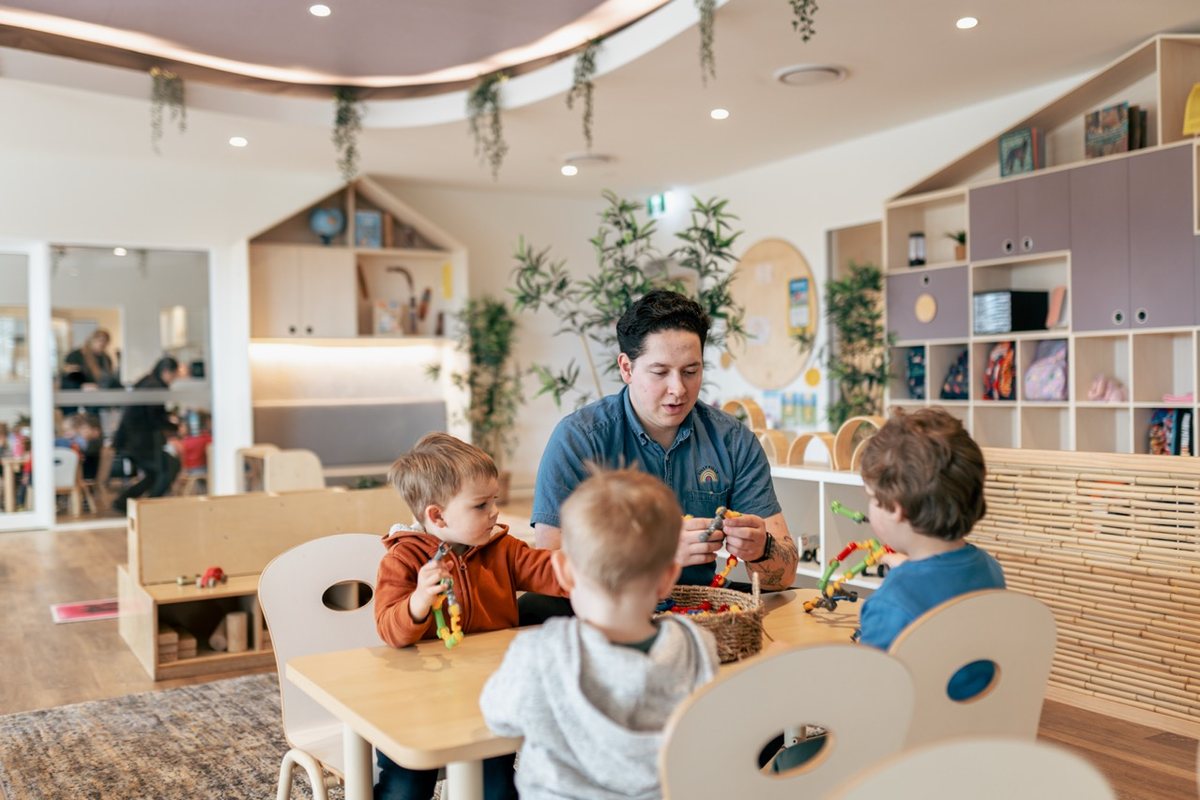
The photography worked alongside the video, capturing the physical environment in detail: the spaces children move through, the materials they interact with, the way light moves through the rooms at different times of day. These images give the website and social content a consistent visual language that reinforces what the video communicates.
The Challenges of Shooting in Early Learning Environments
Filming in any environment with young children requires patience, flexibility, and a quiet presence. Children at this age are not going to perform for a camera, and you wouldn’t want them to. The goal is to be as unobtrusive as possible while still capturing moments that feel genuine.
That means smaller crews, longer observational periods, and being comfortable with the idea that the best moments often happen unexpectedly. You set up your position, you wait, and you stay ready. A child concentrating deeply on something, an educator crouching down to the level of a two-year-old to listen, a group moment where something funny happens and the whole room lights up: these are the frames that do the real work.
We’ve navigated similar considerations in other early learning projects. Our work with Harbour Early Learning covered some of the same territory, with a focus on helping families connect emotionally to a centre before making a decision.
What the Content Needed to Communicate
Beyond the practical execution, the content had to communicate several things at once:
- That the physical environment is stimulating, safe, and carefully considered
- That the educators are warm, present, and genuinely engaged with the children in their care
- That the philosophy of the centre is real, not just a statement on a website
- That this is a place where a child would be happy and where a parent would feel at ease
None of those things can be said directly in a video without it sounding hollow. They have to be shown. Which is why the editorial approach matters so much. You’re selecting moments, framing them carefully, and building a sequence that lets the viewer arrive at those conclusions themselves.
Where LillyPilly Uses the Video and Photos
The video sits on the LillyPilly website as a core part of the homepage and enrolment journey. It’s often one of the first substantive things a prospective family engages with when they’re researching the centre.
The photography extends across the website, giving every page a consistent, warm visual register. It’s also used across social media channels, where it helps LillyPilly maintain an ongoing presence that communicates their values without having to post promotional content constantly.
Together, the content gives the centre something genuinely useful: a digital presence that reflects who they actually are, not just who they’d like people to think they are.
What This Kind of Project Teaches Us
Projects like LillyPilly reinforce something we believe strongly about content for people-centred businesses. The content has to be made with the audience’s emotional state in mind, not just their information needs.
A parent researching early learning centres isn’t just looking for facts. They’re looking for reassurance. They want to feel, not just know, that the place is right for their family. Content that understands and serves that emotional need is far more effective than content that just ticks boxes.
This is true across a range of industries. We see it in healthcare and allied health content too, where the person searching is often anxious or uncertain, and the content needs to meet them where they are.
For LillyPilly, getting this right meant that the families who watch the video and feel something, who feel drawn to the centre, who feel a sense of confidence before they’ve even made an enquiry, are the families most likely to enrol and to be genuinely happy once they do. The content doesn’t just fill enrolment spots. It helps the right families find the right place.
If you want to see the full scope of what we produced, take a look at the LillyPilly Early Education Centre case study.
That’s what good content is supposed to do.
Want help applying this to your business?
Book a free discovery call →